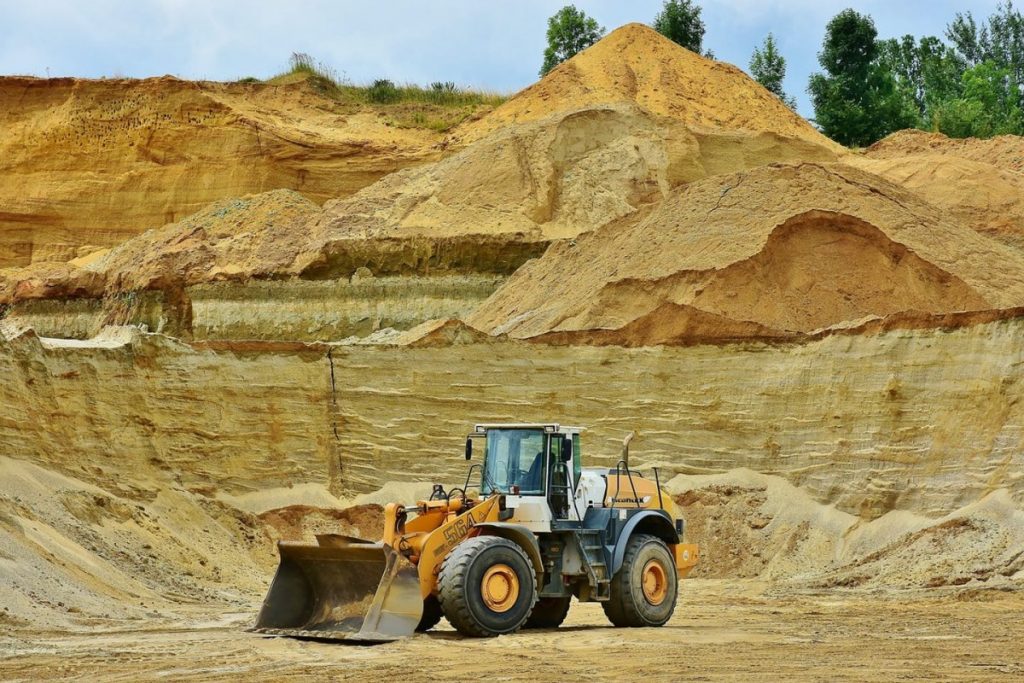
The difference between sand and gravel is just the dimensions of the fabric in question. during this article, we’ll expand on this size classification, also as reasons behind variations in size. Sand may be a granular material derived from the erosion of rocks, ranging in size from 0.075 mm to 4.75 mm. Sand particles are larger than silt but smaller than gravel. Gravel could also be a granular material derived from the erosion of rocks, ranging in size from 4.75 mm to 75 mm. Gravel particles are bigger than sand but smaller than boulders.
Erosion’s effect on size:
Erosion is that the gradual destruction of a landform through natural physical or chemical processes. Cyclical freezing and thawing during the winter can heave and crack bedrock, transported downslope by ice and flowing water within the spring. Eventually, water and pounding wave action can abrade even the foremost resistant rock to smooth round shapes. this is often an example of physical erosion. Chemical erosion includes rock being dissolved by naturally-occurring sulphuric and organic acids, especially carbonate-rich rock like limestone.

Deposition of transported, eroded material occurs when material enters a lower-energy depositional environment. for instance, when transported material reaches the mouth of a river or stream (at its entrance to an ocean/lake) a river delta or outwash plain can form. As water speeds decrease, the force necessary to move material is lost. the most important and densest material like boulders and cobbles are going to be deposited first, then smaller material like stones and sand, finally ending in silt and clay. this sort of water-lain action will effectively sort material by size and density forming sand and gravel deposits which will be useful in building and construction.
Size Classifications
As briefly defined within the table above, sand and gravel are both loose aggregations of rounded products of abrasion that differ only by grain size. Size classifications vary, but generally well-sorted sand has individual grain sizes of between 0.0625 mm and 4 mm, whereas gravel has individual grain sizes of between 4 mm and 75mm. The qualifiers ‘course’, ‘medium’, and ‘fine’ often precede ‘sand’ and ‘gravel’ to subdivide this size ranges further.
City Landscaping derives the subsequent two aggregate products from an equivalent source (rocks eroded and deposited by glaciation into esker landforms, but screens the fabric so as to supply various gradations of products. the primary product, Brown Play Sand, is assessed as sand whereas the second product, Natural Pea Stone is assessed as gravel.


Other Factors to Consider
Depending on the appliance, the degree of sphericity (roundedness) of sand and gravel is additionally important. When increased angularity is required and can’t be sourced from naturally-occurring gravel or sand deposits, the fabric is often made through industrial crushers and screeners which source material from a rock quarry. Road and railway track ballast often require angular gravel thanks to its resistance to compaction and movement. If you’ve got an upcoming project that needs either sand or gravel, you’ll request a quote from City Landscaping online here.