
How to Calculate How Much Mulch You Need
A simple guide to measuring your beds and ordering the right amount of mulch — no waste, no shortfall.
Mulch is one of the fastest ways to refresh a yard, protect plant roots, reduce weeds and make garden beds look finished. The most common mistake is ordering by guesswork instead of measuring the bed area and target depth.
Use this guide to calculate cubic yards accurately before requesting pickup or delivery from City Landscape Supplies Depot.
Measure the bed area first
Measure the length and width of each garden bed in feet. For rectangular beds, multiply length by width. For irregular beds, split the space into smaller rectangles, measure each one, and add the totals together.
If the bed has curves, round up slightly. A small buffer is better than leaving thin spots around shrubs, fence lines or edging.
- 10 ft × 12 ft bed = 120 square feet
- Two 4 ft × 20 ft beds = 160 square feet total
- Round irregular spaces up by 5–10% for cleaner coverage
Choose the right mulch depth
For most Edmonton garden beds, 2–3 inches of mulch is ideal. New beds or bare soil usually need close to 3 inches. Existing beds with mulch already in place may only need a 1–2 inch top-up.
Avoid piling mulch directly against tree trunks or plant stems. Leave a small gap so moisture does not sit against the bark.
- Fresh bed: 3 inches
- Annual refresh: 1–2 inches
- Tree rings: keep mulch pulled back from the trunk
Use the cubic yard formula
Convert your depth from inches to feet, multiply by square footage, then divide by 27. The formula is: square feet × depth in feet ÷ 27 = cubic yards.
For example, a 120 square foot bed at 3 inches deep is 120 × 0.25 ÷ 27 = 1.11 cubic yards. Ordering 1.25 yards gives you a practical buffer for edges and settling.
Pick the best mulch for the look you want
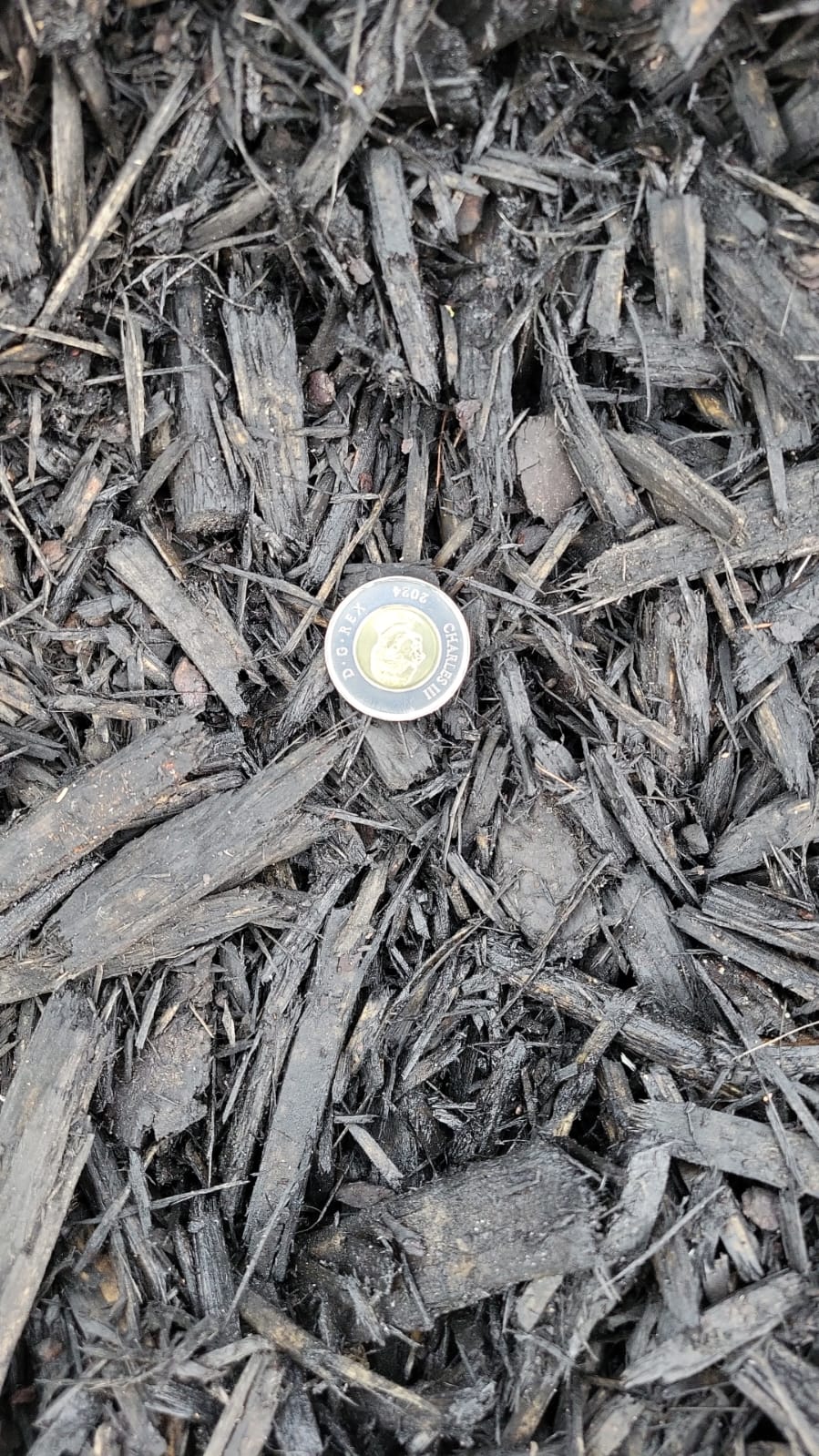
Black mulch gives a bold contrast against green lawns and light stone. Cedar mulch has a natural warm tone and classic garden look. Pine mulch and red mulch are useful when you want a softer or more decorative finish.
If you are matching an existing bed, bring a photo or visit the yard before ordering so the colour and texture feel consistent across the property.
Project checklist
- Measure every bed in feet
- Select 2–3 inches for most beds
- Convert inches to feet before calculating
- Order a small buffer for edges and settling
- Ask about pickup or local delivery availability
Recommended next steps
Need supplies for your project?
Browse our landscape supplies, reserve a rental, or request a quote.